Buy chiaseed.com ?
We are moving the project
chiaseed.com .
Are you interested in purchasing the domain
chiaseed.com ?
domain@kv-gmbh.de · 0541-91531010
Buy chiaseed.com ?
How does nutrition and digestion occur in paramecia?
Paramecia obtain nutrition through phagocytosis, where they engulf food particles such as bacteria or algae using their cilia. Once the food particles are inside the paramecium, they are enclosed in a food vacuole. Digestive enzymes are then secreted into the food vacuole to break down the food particles into smaller molecules. These nutrients are then absorbed by the paramecium for energy and growth. Any undigested material is expelled from the cell through a process called exocytosis. **
How does the nutrition and digestion occur in paramecia?
Paramecia obtain nutrition through phagocytosis, where they engulf food particles such as bacteria, algae, and other organic matter. Once inside the cell, the food vacuole containing the engulfed particles fuses with lysosomes, where digestion occurs. Enzymes within the lysosomes break down the food particles into smaller molecules, which are then absorbed and utilized by the paramecium for energy and growth. Waste products are expelled from the cell through a specialized structure called the anal pore. **
Similar search terms for Paramecia
Top-Angebote
Products related to Paramecia:
-
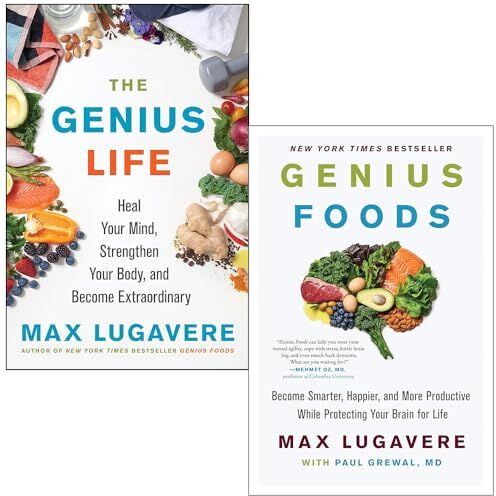
Harper ltd Max Lugavere 2 Book Set – Genius Foods & The Genius Life Brain Health, Nutrition & Wellness CollectionMax Lugavere 2-Book Collection Set (The Genius Life & Genius Foods – Nutrition, Health, Wellness, Diet, Brain & Body Health, Self-Help & Fitness) The Genius Life: Heal Your Mind, Strengthen Your Body, and Become Extraordinary: Supporting the work of Battersea Dogs and Cats Home.Enjoy a heartwarming dog to brighten every single day of the year. From Pickles, the dog who single-handedly saved the 1966 world cup, to Pal, who found silver screen fame as the original Lassie, Battersea's A Dog a Day contains 365 fascinating stories of dogs to enjoy throughout the year.Beautifully packaged and illustrated throughout with charming illustrations of cheeky puppies and hounds, this is the perfect book for any lover of our four-legged friends. Genius Foods: Become Smarter, Happier, and More Productive While Protecting Your Brain for Life: After his mother was diagnosed with a mysterious form of dementia, Max Lugavere put his successful media career on hold to learn everything he could about brain health and performance. For the better half of a decade, he consumed the most up-to-date scientific research, talked to dozens of leading scientists and clinicians around the world, and visited the country’s best neurology departments—all in the hopes of understanding his mother’s condition.Now, in Genius Foods, Lugavere presents a comprehensive guide to brain optimization. He uncovers the stunning link between our dietary and lifestyle choices and our brain functions, revealing how the foods you eat directly affect your ability to focus, learn, remember, create, analyze new ideas, and maintain a balanced mood.12,95 £*Shipping: 2,99 £Secure redirect to the provider
-
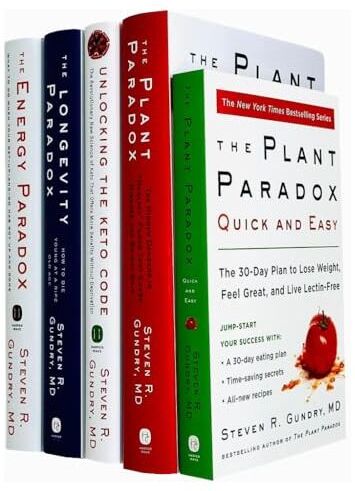
Harper ltd Dr Steven R Gundry 5 Books Collection Set – Plant Paradox, Diet & Gut Health Nutrition CollectionDr. Steven R Gundry MD 5 Books Collection Set (The Plant Paradox, The Longevity Paradox, The Energy Paradox, Unlocking The Keto Code & [Paperback] The Plant Paradox Quick and Easy): The Plant Paradox Quick and Easy[Paperback]: The Plant Paradox, readers learned the surprising truth about foods that have long been regarded as healthy. Lectins—a type of protein found in fruits, vegetables, legumes, dairy, and grains—wreak havoc on the gut, creating systemic inflammation and laying the groundwork for disease and weight gain. The Plant Paradox: In The Plant Paradox, renowned cardiologist Dr. Steven Gundry reveals that gluten is just one variety of a common, and highly toxic, plant-based protein called lectin. Lectins are found not only in grains like wheat but also in the “gluten-free” foods. The Longevity Paradox: Dr. Gundry has discovered that the “diseases of aging” we most fear are not simply a function of age; rather, they are a byproduct of the way we have lived over the decades. In The Longevity Paradox, he maps out a new approach to aging well—one that is based on supporting the health of the “oldest” parts of us: the microorganisms that live within our bodies. The Energy Paradox: Dr. Gundry expands upon his previous discussions of gut, microbiome, and mitochondrial health, linking immune malfunction to the mental and physical symptoms of fatigue—including exhaustion, brain fog, depression, anxiety, and low metabolism. Unlocking the Keto Code: In Unlocking the Keto Code, Dr. Gundry reveals the biological mechanism that makes keto diets so successful: a cellular process known as “mitochondrial uncoupling.” As it turns out, ketones are not the magical fuel source they’ve been made out to be.22,45 £*Shipping: 2,99 £Secure redirect to the provider
-
Organic Castor Oil Pack Wraps, Natural Liver Detox & Abdominal Wellness Solution Organic Castor Oil Pack Wraps, Natural Liver Detox & Abdominal Wellness SolutionCastor Oil Pack Wraps are disposable, selfadhesive patches designed to naturally support liver detox, abdominal wellness, and digestive comfort. They provide a simple, safe, and messfree way to help your body eliminate toxins, improve circulation,...40,97 $*Shipping: 0,00 $Secure redirect to the provider


-
Are paramecia animal or plant single-celled organisms?
Paramecia are single-celled organisms that belong to the kingdom Protista. They are considered to be animal-like protists because they are heterotrophic, meaning they obtain their nutrients by ingesting other organisms. Paramecia are not considered to be plants because they do not perform photosynthesis and do not have cell walls made of cellulose. Instead, they have cilia for movement and feed on bacteria and other small organisms. **
-
What does the competition look like for paramecia?
The competition for paramecia is primarily with other microorganisms in their environment, such as bacteria and other protozoa. They compete for resources such as food and living space. Paramecia use their cilia to move and feed on bacteria and other small organisms, and they also reproduce rapidly, allowing them to outcompete other microorganisms for resources. Additionally, paramecia may also face competition from predators such as other protozoa, small crustaceans, and even some types of algae. **
-
What is the ecology of paramecia and yeast cells?
Paramecia are single-celled organisms that are found in freshwater environments. They are heterotrophic, meaning they feed on bacteria and other small organisms. Paramecia play a role in the ecosystem by helping to control bacterial populations and serving as a food source for larger organisms. Yeast cells are also single-celled organisms that are found in various environments, including soil, plants, and the human body. They are important in the process of fermentation, which is used in the production of bread, beer, and wine. Yeast cells also play a role in the decomposition of organic matter and are a food source for other organisms in the ecosystem. **
-
What can be observed with a microscope in paramecia?
With a microscope, one can observe the cilia that paramecia use for movement, as well as their characteristic slipper-like shape. Additionally, the nucleus, contractile vacuoles, and food vacuoles within the paramecia can be seen under a microscope. Observing paramecia under a microscope can also reveal their feeding behavior, as they engulf food particles through a process called phagocytosis. **

Why do some paramecia not have a pulsating vacuole?
Some paramecia do not have a pulsating vacuole because they may live in environments with stable water conditions, such as freshwater ponds or slow-moving streams, where they do not need to actively regulate their water balance. Additionally, some species of paramecia may have evolved alternative mechanisms for maintaining water balance, such as specialized contractile vacuoles or other cellular structures. The absence of a pulsating vacuole in certain paramecia may also be a result of genetic variation and adaptation to specific ecological niches. **
Why do paramecia in the sea not have pulsating vacuoles?
Paramecia in the sea do not have pulsating vacuoles because they do not need them to regulate water balance. In a marine environment, the concentration of salt outside the cell is similar to that inside the cell, so there is no need for the paramecia to actively pump out excess water. Pulsating vacuoles are more commonly found in freshwater paramecia, where they help regulate water balance by pumping out excess water that enters the cell due to osmosis. **
Top-Angebote
Products related to Paramecia:
-
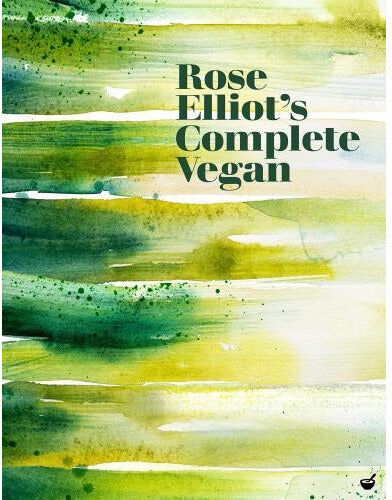
Nourish Books Rose Elliot Complete Vegan Cookbook – Plant-Based Diet Recipes & Health Benefits Guide Healthy Vegan Cooking & Nutrition BookRose Elliot's Complete Vegan Description The ultimate bible of plant-based eating; by renowned vegan cook Rose Elliot. With an increasing awareness of the ethical; environmental and health benefits of following a plant-based diet; the vegan movement is now stronger than ever. Rose Elliot has been at the forefront of meat-free foodwriting for over 35 years; and here offers readers a masterclass in vegan cookery. The book includes more than 150 recipes; from basics such as nut milks; butters; cheeses and creams; to recipes for breakfasts; light bites and lunches; labour-light midweek mains; spectacular dishes for entertaining; delicious desserts and tempting baked goods. The recipes range from comforting dishes like Macaroni Cheese to more exotic fare; such as a fragrant Aubergine Pilaff Cake. Proving that following a vegan diet doesn't mean missing out on your favourite foods; the book also shows how to whip up a creamy mayo; classic Yorkshire pudding or wonderfully crisp meringue at home; all without using any animal products. Packed with beautiful photography; and mouthwatering recipes; Rose Elliot's Complete Vegan is the ultimate resource for any vegan cook no matter their level of experience or expertise.5,88 £*Shipping: 2,99 £Secure redirect to the provider
-
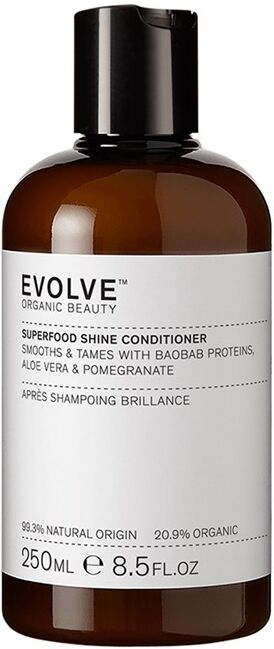
Evolve Beauty Evolve Organic Beauty Superfood Shine Conditioner 250mlRevitalise your hair care routine with the Evolve Organic Beauty Superfood Shine Conditioner 250ml. Specially formulated for normal to dry hair, this luxurious conditioner harnesses the power of natural and organic ingredients to replenish brilliant shine, significantly reduce frizz, and boost irresistible softness. Its lightweight yet deeply nourishing formula ensures your locks remain healthy, smooth, and entirely tangle-free.At the heart of this high-performance conditioner are natural baobab proteins, which have been scientifically shown to strengthen and protect hair while boosting overall smoothness. Complemented by organic pomegranate extract, it works to intensely rehydrate and defend your hair against environmental stressors. Additionally, organic aloe vera gently soothes the scalp, providing a calming and refreshing experience with every wash.Perfect for anyone seeking clean, conscious beauty that delivers professional results, this superfood-infused conditioner leaves hair feeling revitalised, manageable, and radiantly glossy. Elevate your daily routine and unlock the secret to naturally beautiful, frizz-free hair with this essential organic treatment.Key BenefitsReplenishes shine, reduces frizz, and boosts softness for smooth, tangle-free, and healthy hair - Strengthens and protects hair while boosting smoothness using nutrient-rich baobab proteins - Rehydrates the hair and soothes the scalp with organic pomegranate extract and aloe veraIngredients:Aqua (Water), Cetearyl Alcohol, Coco-Caprylate, Distearoylethyl Dimonium Chloride, Gluconolactone, Parfum (Naturally Derived Fragrance), Hydrolyzed Adansonia Digitata (Baobab) Seed Extract, Punica Granatum (Pomegranate) Fruit Extract*, Aloe Barbadensis Leaf Juice Powder*, Helianthus Annuus (Sunflower) Seed Oil, Glycerin**, Polyglyceryl-6 Stearate, Sodium Benzoate, Polyglyceryl-6 Behenate, Tocopherol, Calcium Gluconate, Benzyl Alcohol, Potassium Sorbate, Citric Acid, Citral, Geraniol, Limonene, Linalool16,00 £*Shipping: 2,95 £Secure redirect to the provider
-
Harper ltd Max Lugavere 2 Book Set – Genius Foods & The Genius Life Brain Health, Nutrition & Wellness CollectionMax Lugavere 2-Book Collection Set (The Genius Life & Genius Foods – Nutrition, Health, Wellness, Diet, Brain & Body Health, Self-Help & Fitness) The Genius Life: Heal Your Mind, Strengthen Your Body, and Become Extraordinary: Supporting the work of Battersea Dogs and Cats Home.Enjoy a heartwarming dog to brighten every single day of the year. From Pickles, the dog who single-handedly saved the 1966 world cup, to Pal, who found silver screen fame as the original Lassie, Battersea's A Dog a Day contains 365 fascinating stories of dogs to enjoy throughout the year.Beautifully packaged and illustrated throughout with charming illustrations of cheeky puppies and hounds, this is the perfect book for any lover of our four-legged friends. Genius Foods: Become Smarter, Happier, and More Productive While Protecting Your Brain for Life: After his mother was diagnosed with a mysterious form of dementia, Max Lugavere put his successful media career on hold to learn everything he could about brain health and performance. For the better half of a decade, he consumed the most up-to-date scientific research, talked to dozens of leading scientists and clinicians around the world, and visited the country’s best neurology departments—all in the hopes of understanding his mother’s condition.Now, in Genius Foods, Lugavere presents a comprehensive guide to brain optimization. He uncovers the stunning link between our dietary and lifestyle choices and our brain functions, revealing how the foods you eat directly affect your ability to focus, learn, remember, create, analyze new ideas, and maintain a balanced mood.12,95 £*Shipping: 2,99 £Secure redirect to the provider
-
How does nutrition and digestion occur in paramecia?
Paramecia obtain nutrition through phagocytosis, where they engulf food particles such as bacteria or algae using their cilia. Once the food particles are inside the paramecium, they are enclosed in a food vacuole. Digestive enzymes are then secreted into the food vacuole to break down the food particles into smaller molecules. These nutrients are then absorbed by the paramecium for energy and growth. Any undigested material is expelled from the cell through a process called exocytosis. **
-
How does the nutrition and digestion occur in paramecia?
Paramecia obtain nutrition through phagocytosis, where they engulf food particles such as bacteria, algae, and other organic matter. Once inside the cell, the food vacuole containing the engulfed particles fuses with lysosomes, where digestion occurs. Enzymes within the lysosomes break down the food particles into smaller molecules, which are then absorbed and utilized by the paramecium for energy and growth. Waste products are expelled from the cell through a specialized structure called the anal pore. **
-
Are paramecia animal or plant single-celled organisms?
Paramecia are single-celled organisms that belong to the kingdom Protista. They are considered to be animal-like protists because they are heterotrophic, meaning they obtain their nutrients by ingesting other organisms. Paramecia are not considered to be plants because they do not perform photosynthesis and do not have cell walls made of cellulose. Instead, they have cilia for movement and feed on bacteria and other small organisms. **
-
What does the competition look like for paramecia?
The competition for paramecia is primarily with other microorganisms in their environment, such as bacteria and other protozoa. They compete for resources such as food and living space. Paramecia use their cilia to move and feed on bacteria and other small organisms, and they also reproduce rapidly, allowing them to outcompete other microorganisms for resources. Additionally, paramecia may also face competition from predators such as other protozoa, small crustaceans, and even some types of algae. **
Similar search terms for Paramecia
-
Harper ltd Dr Steven R Gundry 5 Books Collection Set – Plant Paradox, Diet & Gut Health Nutrition CollectionDr. Steven R Gundry MD 5 Books Collection Set (The Plant Paradox, The Longevity Paradox, The Energy Paradox, Unlocking The Keto Code & [Paperback] The Plant Paradox Quick and Easy): The Plant Paradox Quick and Easy[Paperback]: The Plant Paradox, readers learned the surprising truth about foods that have long been regarded as healthy. Lectins—a type of protein found in fruits, vegetables, legumes, dairy, and grains—wreak havoc on the gut, creating systemic inflammation and laying the groundwork for disease and weight gain. The Plant Paradox: In The Plant Paradox, renowned cardiologist Dr. Steven Gundry reveals that gluten is just one variety of a common, and highly toxic, plant-based protein called lectin. Lectins are found not only in grains like wheat but also in the “gluten-free” foods. The Longevity Paradox: Dr. Gundry has discovered that the “diseases of aging” we most fear are not simply a function of age; rather, they are a byproduct of the way we have lived over the decades. In The Longevity Paradox, he maps out a new approach to aging well—one that is based on supporting the health of the “oldest” parts of us: the microorganisms that live within our bodies. The Energy Paradox: Dr. Gundry expands upon his previous discussions of gut, microbiome, and mitochondrial health, linking immune malfunction to the mental and physical symptoms of fatigue—including exhaustion, brain fog, depression, anxiety, and low metabolism. Unlocking the Keto Code: In Unlocking the Keto Code, Dr. Gundry reveals the biological mechanism that makes keto diets so successful: a cellular process known as “mitochondrial uncoupling.” As it turns out, ketones are not the magical fuel source they’ve been made out to be.22,45 £*Shipping: 2,99 £Secure redirect to the provider
-
Organic Castor Oil Pack Wraps, Natural Liver Detox & Abdominal Wellness Solution Organic Castor Oil Pack Wraps, Natural Liver Detox & Abdominal Wellness SolutionCastor Oil Pack Wraps are disposable, selfadhesive patches designed to naturally support liver detox, abdominal wellness, and digestive comfort. They provide a simple, safe, and messfree way to help your body eliminate toxins, improve circulation,...40,97 $*Shipping: 0,00 $Secure redirect to the provider
-
Quantum Magnetic Health Analyzer For Full Body Wellness Asd Quantum Magnetic Health Analyzer For Full Body Wellness AsdAdvanced BioEnergy Health Scanning at Home Take charge of your wellness with this quantum magnetic body analyzera handheld device designed to detect subhealth indicators across multiple body systems. Using bioresonance technology and touchbased...189,97 $*Shipping: 0,00 $Secure redirect to the provider
-
Plant Based Cuticle Nutrient Oil yellowRestore the natural vitality of your hands with a highcapacity treatment designed for deep cellular repair. This 75ml cuticle nutrient oil is a professionalgrade solution formulated to nourish and repair damaged nails and surrounding skin. Infused...59,97 $*Shipping: 0,00 $Secure redirect to the provider
-
What is the ecology of paramecia and yeast cells?
Paramecia are single-celled organisms that are found in freshwater environments. They are heterotrophic, meaning they feed on bacteria and other small organisms. Paramecia play a role in the ecosystem by helping to control bacterial populations and serving as a food source for larger organisms. Yeast cells are also single-celled organisms that are found in various environments, including soil, plants, and the human body. They are important in the process of fermentation, which is used in the production of bread, beer, and wine. Yeast cells also play a role in the decomposition of organic matter and are a food source for other organisms in the ecosystem. **
-
What can be observed with a microscope in paramecia?
With a microscope, one can observe the cilia that paramecia use for movement, as well as their characteristic slipper-like shape. Additionally, the nucleus, contractile vacuoles, and food vacuoles within the paramecia can be seen under a microscope. Observing paramecia under a microscope can also reveal their feeding behavior, as they engulf food particles through a process called phagocytosis. **
-
Why do some paramecia not have a pulsating vacuole?
Some paramecia do not have a pulsating vacuole because they may live in environments with stable water conditions, such as freshwater ponds or slow-moving streams, where they do not need to actively regulate their water balance. Additionally, some species of paramecia may have evolved alternative mechanisms for maintaining water balance, such as specialized contractile vacuoles or other cellular structures. The absence of a pulsating vacuole in certain paramecia may also be a result of genetic variation and adaptation to specific ecological niches. **
-
Why do paramecia in the sea not have pulsating vacuoles?
Paramecia in the sea do not have pulsating vacuoles because they do not need them to regulate water balance. In a marine environment, the concentration of salt outside the cell is similar to that inside the cell, so there is no need for the paramecia to actively pump out excess water. Pulsating vacuoles are more commonly found in freshwater paramecia, where they help regulate water balance by pumping out excess water that enters the cell due to osmosis. **
* All prices are inclusive of VAT and, if applicable, plus shipping costs. The offer information is based on the details provided by the respective shop and is updated through automated processes. Real-time updates do not occur, so deviations can occur in individual cases. ** Note: Parts of this content were created by AI.